
Table of Contents
Introduction:
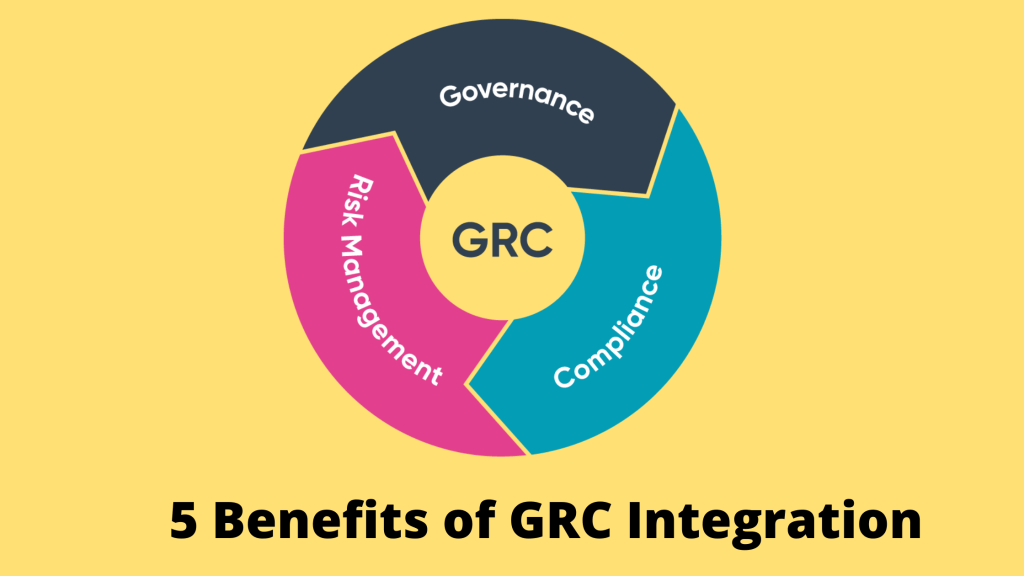
Over the last decade, there has been a meteoric surge in the use of Governance, Risk, and Compliance (GRC) software systems. What were formerly discrete business disciplines are now integral to everything and among the most crucial functions in a business.
Keeping up with governance standards, managing and minimising risk, and assuring compliance are all interconnected and taken very seriously by the most astute organisations. They all have the foresight to recognise the benefits to the company and recognise the need to invest in the necessary tools to guarantee the governance, risk, and compliance departments all perform to the best of their abilities.
GRC can also assist the organisation in capitalising on upside potential by giving timely risk intelligence on emerging digital technologies. In a nutshell, the future of GRC is an enabler of business development and performance.
GRC has a wonderful chance to contribute value to this new world. GRC, for example, can assist a company build its reputation and inspiring trust by advocating for greater standards of corporate governance and honesty. GRC can help businesses grow into new areas more quickly by offering a clear picture of the regulatory situation. In this article we shall how GRC assists businesses, why software usage is increasing and its importance.
How can GRC assist businesses?
The first line of defence must be empowered if GRC’s potential as a growth enabler is to be realised. That is the hub of activity. Every day, front-line employees incur risks, whether they are interacting with consumers, producing a product, or managing confidential information. However, many firms, are not held accountable for their risks or do not fully comprehend their position in risk management. As a result, they make rash commercial decisions without fully comprehending the risks involved.
When the first line assumes greater responsibility for GRC, the second and third lines are freed up to focus on what they do best: providing oversight, developing comprehensive GRC frameworks, maximising efficiency and productivity, and finally, guiding and advising the board and executive team. But how can you get to the point where all of your defences are successfully linked and coordinated to allow for business growth? This gets us to the four GRC pillars:
- GRC should be as basic as possible so that the first line of defence may readily accept and practise it.
- GRC must be widespread — that is, it must become a vital, yet non-intrusive, part of the organisational fabric.
- GRC must be intelligent — decision-makers must be equipped with accurate GRC insights at the right moment to drive development and success.
- GRC must be widespread — that is, it must become a vital, yet non-intrusive, part of the organisational fabric.
Finally, GRC must be cloud-based to be scaled up quickly, flexibly, and cost-effectively.
What are the benefits of GRC integration?
1. Strategic business decision making:
Technology-enabled Strategic Decision-Making Risk and compliance management teams can use GRC integration to evaluate and share data for a 360-degree perspective of the organization’s risk landscape. As a result of this holistic viewpoint, boards and executives are better able to make decisions that connect management activities with business strategy and performance.
2. There will be no more data silos:
Sharing data across business units, departments, and risk and compliance activities save money while also providing better visibility, more holistic knowledge of risks and controls, and easier access to data and reporting. Integrated data shows essential relationships and dependencies across the company and increases executive oversight, whereas siloed data encourages duplication and inaccuracy, and may even hide significant hazards.
3. Cross-Functional Communication Has Improved:
Improved communication and teamwork are some advantages of data sharing between departments. When all teams use the same system for risk data, documentation, and task management, they’ll be able to define and discuss risk in the same way. This encourages departments to share relevant information — for example, the business continuity team can share business impact analysis results with ERM, and the compliance team can share relevant regulatory or legal changes with policy management — allowing individual business units to work more effectively together toward organisational goals.
4. Streamlined Administration:
It takes time to track crucial information across various papers, computers, and/or storage techniques, which makes data and task management more difficult than it has to be. On the other hand, automating manual tasks and creating repeatable procedures and workflows are important.
5. Greater Flexibility:
A lack of visibility into business processes, vendor relationships, risk exposure, and other essential concerns for integrated risk management plagues many firms. Organizations can quickly identify risks and opportunities and establish data-driven action plans by combining analytics and reporting for these and other areas on a single platform. Launching a new product or service, contracting with a new vendor, or responding to market changes becomes faster and more efficient as a result.
Conclusion:
GRC will focus on empowering businesses to pursue new possibilities, markets, and innovations. The corporate environment is becoming increasingly competitive and disruptive. The companies that figure out how to take better risks, drive greater performance, and exhibit better governance will be the ones to keep an eye on. We here at Security Pilgrim are here to enable you in making your business robust and cyber security.