
Everyone in today’s competitive environment is searching for innovative ways to transform and use new technologies. Web scraping (also known as web data extraction or data scraping) is a solution for those who want smart access to systematic web data. Web scraping is beneficial if the public website from which you want data does not have an API, or if it does but only delivers limited access to the information. In this blog post, we will discuss web scraping in more detail.
Table of Contents
What is Website or Web Scraping?
Web scraping is the process of extracting content and data from a website using bots. Web scraping, instead of screen scraping, which only copies pixels showcased onscreen, retrieves fundamental HTML code and, with it, data stored in the database. After that, the scraper can imitate the whole website’s content somewhere else.
Web scraping is employed in many online businesses that depend on data harvesting. Among the legitimate use cases are:
- Search engine bots crawl a website, analyze its content, and rank it.
- Price comparison websites use bots to automatically fetch prices and product descriptions from allied seller websites.
- Market research firms use scrapers to collect blogs and social media (e.g., for sentiment analysis).
Web scraping can also be used for malicious purposes, such as price undercutting and stealing copyrighted content, or some just incorporate botnets. A scraper can cause significant financial losses to an online entity, especially if it is a business that relies heavily on competitive pricing structures or deals in content delivery.
Process of Web Scraping
Many people can easily make their own web scrappers. A usual web scraping procedure looks like this:
- Determine the target website.
- Gather the URLs of the pages from which you want to extract data.
- Submit a request to these URLs to obtain the page’s HTML.
- Locators can be used to find data in HTML.
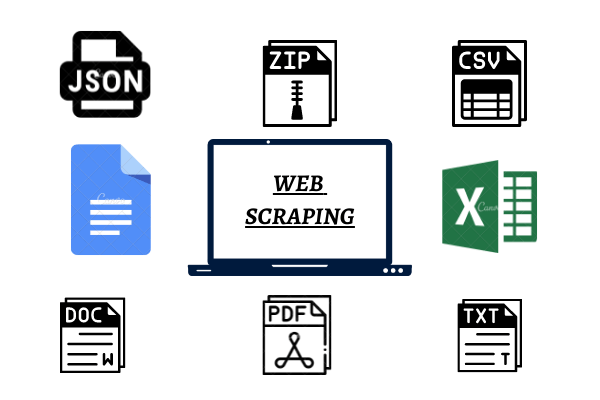
- Save all the data in a JSON, CSV, or other organized format.
If you only have a small task, the process will be straightforward. However, if you require data at scale, you must overcome a number of challenges. Preserving the scraper if the website configuration changes, handling proxies, executing javascript, or operating around antibots are all examples. These are all highly technical issues that can consume a lot of resources.
There are numerous open-source web data scraping tools available, but each has its own set of limitations. This is one of the reasons why many businesses prefer to outsource their web data tasks.
What is Web Scraping Used for?
Price Intelligence
The most common use for web scraping is price intelligence. Retrieving product and pricing details from e-commerce websites and converting them into intelligence is a vital part of modern e-commerce companies looking to make improved pricing/marketing decisions based on the information.
Web price information and price intelligence can be beneficial in the following ways:
- Dynamic pricing
- Revenue improvements
- Competitor analysis
- Product trend analysis
- Brand and MAP consistency
Market Research
Market research is essential, and it should be guided by the most up-to-date data available. Web scraped data of every shape and size, of excellent quality, density, and insight, is fueling market research and business intelligence all over the world.
- Market trend analysis
- Point of entry optimization
- Development and research
- Market pricing
- Competitor analysis
Real Estate
In the last two decades, the digital transformation of real estate has threatened to interrupt traditional firms and develop strong new players in the market. Agents and brokerages can defend themselves from top-down online competition and make rational market decisions by integrating web scraped product data into their daily operations.
- Property Value Appraisal
- Monitoring Rates of vacancy
- Recognizing Market Direction and
- Assessing Rental Yields
Brand Monitoring
Protecting your online reputation is essential in today’s highly competitive environment. Whether you market your products online and have to maintain a strict pricing policy, or you simply want to understand how people regard your products online, brand testing with web scraping can provide you with this sort of information.
Business Automation
It can be difficult to gain access to your data in some cases. Perhaps you need to retrieve structured data from your own or your partner’s website. However, there is no easy internal way to accomplish this, so it makes sense to build a scraper and simply pick up that data. Rather than attempting to manage complex and difficult internal systems.
Web Scraping: Things to Remember
Web scraping is a legal grey area, but it is not illegal itself. It is the way in which you scrape and also what you scrape that is in question. Here are some of the things to remember for web scraping:
Don’t violate copyright
When scraping a website, you must always take into account whether the web data you intend to extract is protected by copyright. Copyright is described as its own legal right to a tangible piece of work, such as an article, image, or movie. It essentially means that if you make it, you own it. The work must be unique and tangible in order to be copyrightable.
As a result, copyright is crucial to scraping because much of the information on the internet (such as articles and videos) is protected by copyright. However, in some cases, exceptions can implement to all or part of the data, allowing it to be lawfully scraped without breaching the owner’s copyright.
Keep an eye out for login and website terms & conditions.
When you sign in and/or clearly agree to the terms and conditions of a website, you are entering into an agreement with the site admin and agreeing to their web scraping guidelines. Which may expressly state that you are not permitted to scrape any data from the website.
If your spiders must log in to scrape data, you must carefully consider the terms and conditions you agree to, as they may state that you are not permitted to scrape their data. Any agreement you enter into, along with website terms & conditions and privacy rules, should always be recognized.
Don’t breach GDPR
The implementation of GDPR fundamentally alters how EU citizens’ personal data can be scraped (and sometimes non-EU citizens as well).
If any of the scraped information belongs to EU residents, you will be in violation of GDPR unless you have a “legal reason” to scrape and store it. The most popular legal reasons for web scraping are legitimate interest (usually by government officials or law enforcement companies) and consent.