
Data is a company’s most important asset. It is important to take care of your data, whether it is financial information, healthcare information, or a start-up company plan, no matter what field you are in. Despite increased data protection regulations, the chance of a data breach is increasing. According to Capita, 80 percent of data breaches involve personally identifiable information, with each record costing $150.
Table of Contents
What is Data Security?
Data security refers to the process of protecting company data and preventing data loss due to unauthorized access. This includes securing your data against attacks that encrypt or delete data, such as ransomware, as well as threats that modify or damage your data. Data security also ensures that data is accessible to anybody in the business who needs it.
To comply with data protection rules, several sectors necessitate a high level of data security. Organizations that receive payment card information must use and retain payment card data securely, whereas healthcare organizations in the United States must secure private health information (PHI) in accordance with the HIPAA standard.
Even if your company is not subject to a rule or compliance requirement, the existence of a modern corporation is dependent on data security, which can affect both the company’s vital assets and private data belongs to its customers.
Main Elements of Data Security
All companies should adhere to three key principles of data security: confidentiality, integrity, and availability. These concepts are also known as the CIA Triad, and they serve as a security model and structure for top-tier data protection. Here’s what each key element implies in terms of protecting your sensitive data from unauthorized access.
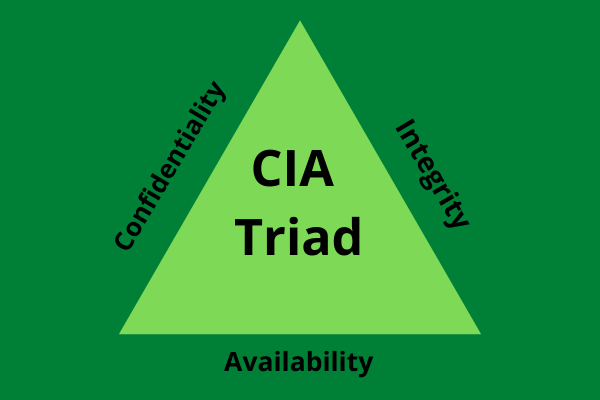
- Confidentiality: Helps ensure that only authorized users with valid credentials have access to data.
- Integrity: Ensure that any data stored is safe, accurate, and not subject to unauthorized modifications.
- Availability: Ensures that data is easy – and securely – available and accessible for ongoing business requirements.
Data Security Techniques and Solutions
Several technologies and practices can help to increase data security. Although no single solution may fix the problem, companies can greatly improve their security posture by combining several of the techniques listed below.
Data Discovery and Classification
Data is stored on servers, interfaces, and cloud systems in advanced IT environments. Visibility over data flows is a key first step in determining whether data is in danger of being stolen or misappropriated. To effectively protect your data, you must first understand the type of data, where it is stored, and what it is used for. Tools for data discovery and classification can be useful.
Data detection is the foundation for understanding what data you have. Data classification enables the development of scalable security solutions by defining which data is sensitive and must be protected. Data detection and classification solutions allow you to tag files on endpoints, file servers, and cloud storage systems, allowing you to see data across the company and apply relevant security policies.
Data Masking
Data masking allows you to build a synthetic version of your corporate data for software testing, learning, and other reasons that do not require real data. The purpose is to protect data while yet providing a feasible alternative when necessary.
Data masking keeps the data type but modifies the values. Encryption, character shifting, and character or word substitution are all methods for modifying data. Whichever approach you use, the values must be changed in a way that cannot be reverse-engineered.
Authentication and Authorization
Secure authentication methods, such as OAuth for web-based services, must be implemented by organizations. When any user, internal or external, asks for sensitive or personal data, it is strongly advised to impose multi-factor authentication.
Furthermore, companies must have a clear authorization framework in place to ensure that each user only has the access privileges necessary to execute a function or consume a service. Periodic audits and automatic tools should be used to clear up permissions and remove authorization from people who no longer require it.
Data Security Audits
Security audits should be performed at least every few months by the organization. This identifies holes and vulnerabilities in the security posture of the company. It is a good idea to have the audit performed by a third-party specialist, such as in a penetration testing model. It is, nevertheless, possible to conduct a security audit in-house. Most essential, if the audit reveals security flaws, the company must spend time and resources to address and correct them.
Data Loss Prevention (DLP)
Organizations can use a variety of protections to prevent data loss, including backing up data to a different place. Physical redundancy can help safeguard data from natural catastrophes, power outages, and local server threats. Durability can be achieved in-house or by replicating data to a remote site or cloud environment.
Data Loss Prevention software solutions can help protect company data in addition to fundamental measures such as backup. DLP software automatically analyzes material to identify sensitive data, allowing for central control and enforcement of data security policies as well as real-time alerts when it identifies improper use of sensitive data.
Strong Password
Providing users with unique, strong passwords is one of the most basic best practices for data security. Many users will choose simply guessable passwords or the same password for several services if central administration and enforcement are not in place. Password spraying and other brute force attacks can easily hack weak password-protected accounts.
Enforcing lengthier passwords and requiring users to update their passwords on a regular basis is a simple measure. These precautions, however, are insufficient, and enterprises should investigate multi-factor authentication (MFA) systems that require users to find themselves using a token or device that they own, or by biometric means.
Conclusion
Data security is not a one-time project. There is no magic wand to blow that will guarantee the complete protection of your data 24 hours a day, seven days a week. Instead, consider data security to be an ongoing, company-wide initiative. You’ll need to use the correct techniques, such as data loss prevention practices, data masking, etc.
















Pingback: Data Governance - Meaning, Importance, and Implementation Process - Security Pilgrim
Pingback: Data Classification - Meaning, Objectives, Types, and Benefits - Security Pilgrim
Pingback: 5 Important Steps for Data Discovery - Security Pilgrim
Pingback: Data Masking - Meaning, Types, Techniques, and Best Practices - Security Pilgrim